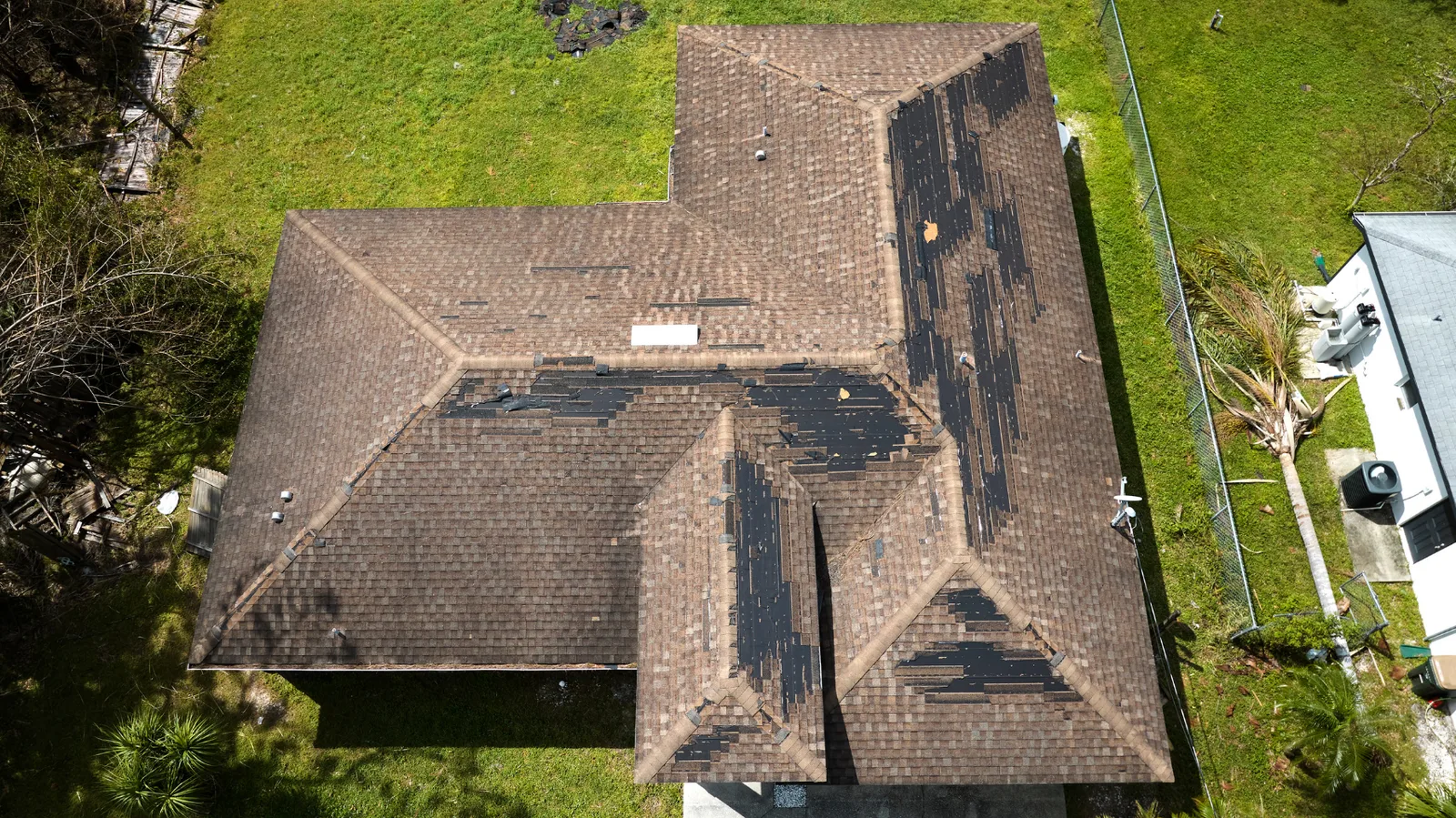
Storm damage roof repair in Claremore
Missing shingles, a new leak or damage after hail? Claremore Roofing Experts can help you understand what your roof needs, starting with a free inspection.
Free roof inspection · Homes & businesses
Prefer to talk? (918) 679-3162
Stay safe while help is arranged
If water is coming in, tell us when you call. Keep people away from damaged areas while the next step is arranged.
A ceiling or structure that looks unsafe
Keep people away from sagging ceilings or visible structural damage. A roofing request is not a substitute for emergency assistance where collapse is a concern.
Electricity and water together
Avoid wet fixtures, equipment and downed lines. Contact the appropriate emergency or utility service rather than entering the area to collect photographs.
Ordinary drips in a safe area
Move belongings or contain drips only if you can do so safely. Note the room and location. The opening on the roof may be somewhere above or beside that point.
What wind and hail can damage
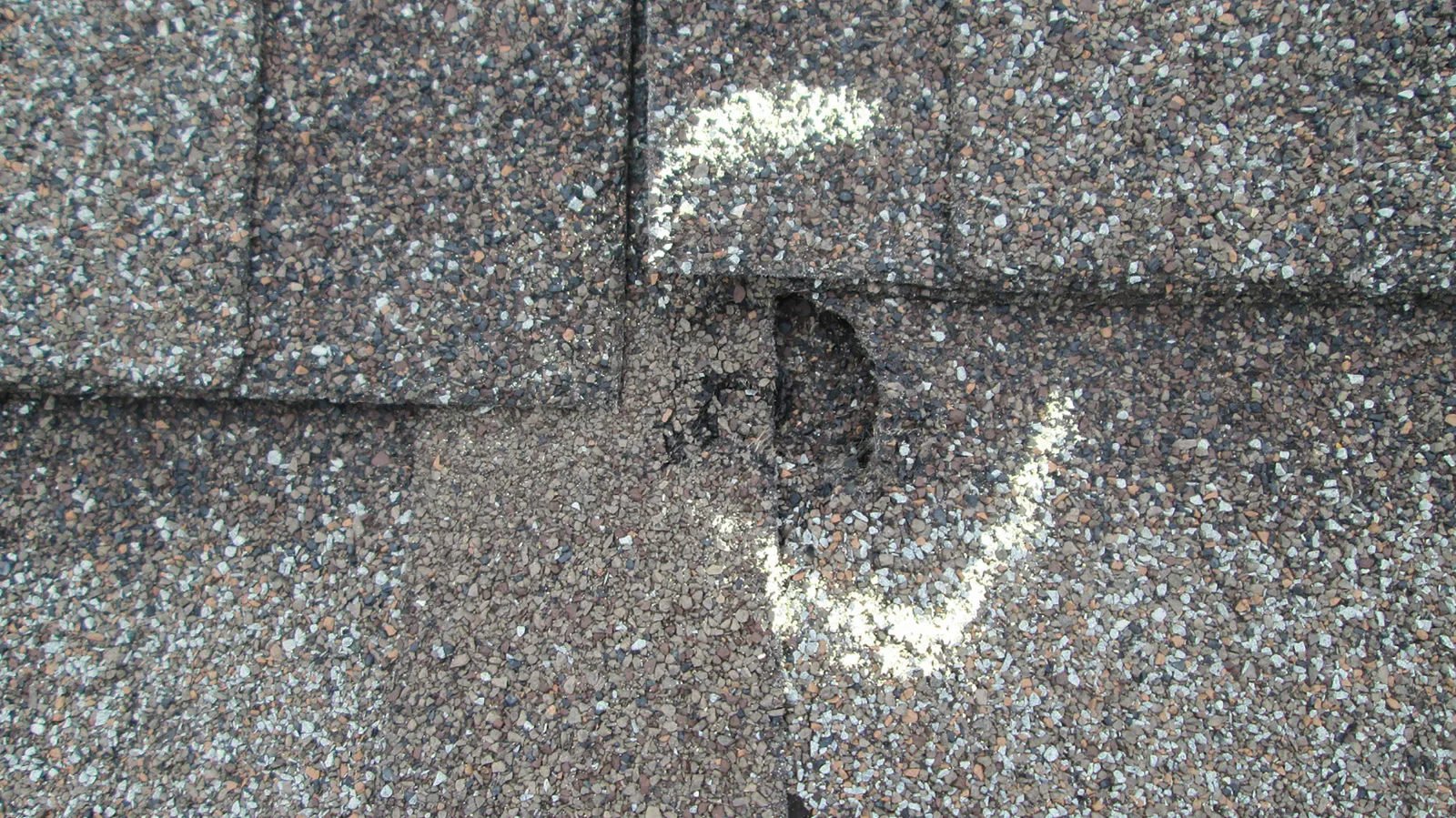
Wind can lift a shingle, crease it at the bend or pull flashing out of place. Pressing the piece back down doesn't repair a torn mat, damaged fastening or a broken seal.
Hail can bruise or fracture the shingle beneath its granules. Dents on gutters help show that impacts occurred, but they don't tell us how every roof slope came through. Wear, foot scuffs and older repairs can leave marks too.
A free inspection brings those details into the repair decision. When damaged shingles can be replaced within sound roofing, repair can be enough. When damage extends farther, the proposed work needs to explain how much of the roof is affected.
From a tarp to a lasting repair
It's a relief when a tarp stops the drip. The next step is repairing the roof it covers, including any damage beneath the shingles.
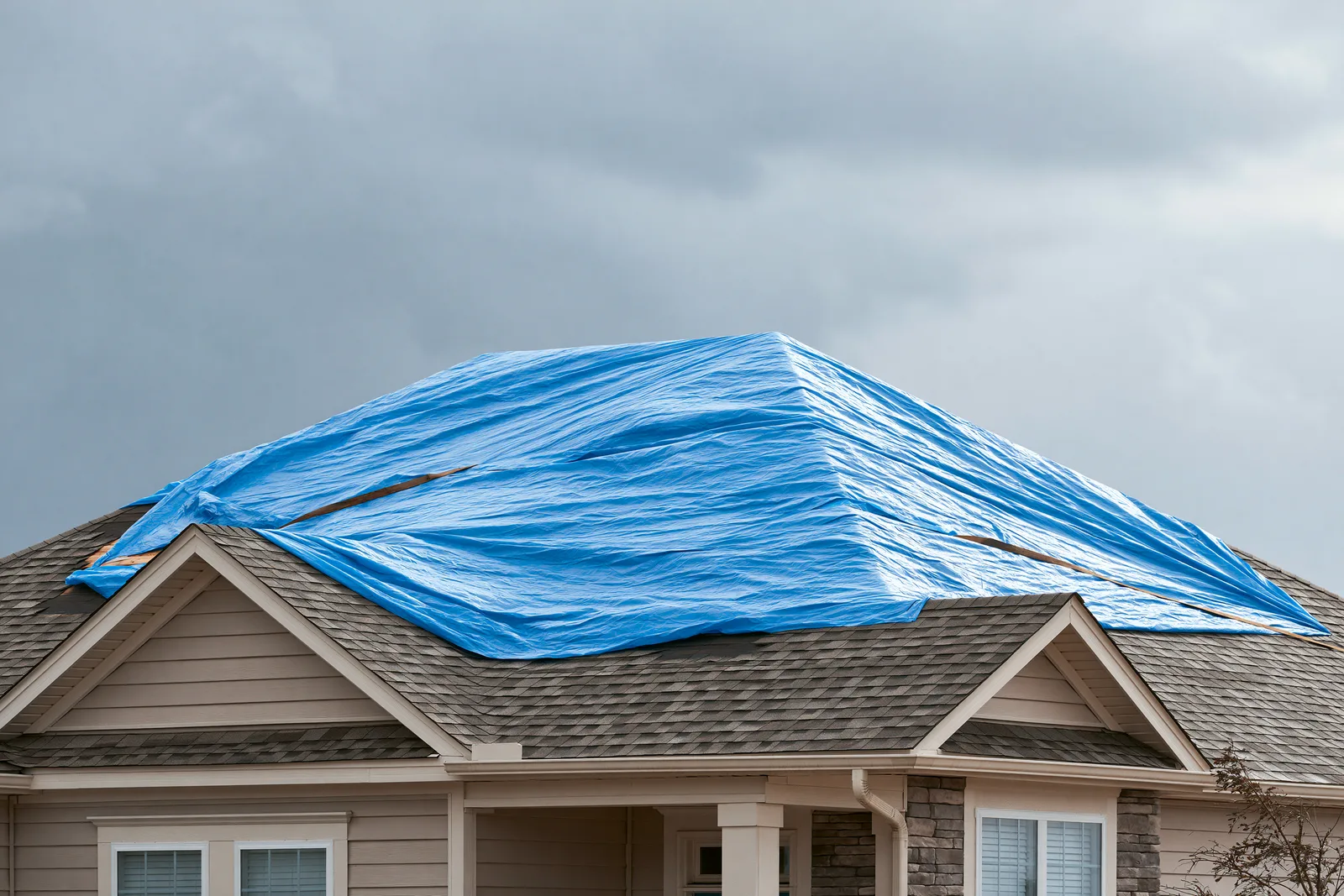
A tarp can stop the rain. The roof underneath still needs repair.
Limit further water entry
Temporary protection can help while the permanent work is arranged. What can be done depends on safe access, the weather and the damage. Mention active leaking when you call.
Check beneath the damage
The damaged covering and nearby wood need a closer look. A tarp can hide an opening, so a dry room doesn't tell us whether the roof underneath is sound.
Work out the repair
One damaged pipe flashing needs different work from torn shingles across a slope. The repair needs to address the parts that failed and any wet or weakened support below them.
Restore the roof
Compatible shingles or membrane, secure fastening and correct flashing overlaps put the roof back together. Wet insulation and damage inside the building may need separate work after the water source is fixed.
What insurance may pay
The amount needed to repair your roof and the amount an insurer pays aren't always the same. The roof may have actual cash value (ACV) coverage even when other parts of the house have replacement-cost coverage. The difference affects how much depreciation stays your responsibility.
- ACV-only roof coverage
- The payment is reduced for depreciation and your deductible. Under ACV-only terms, that depreciation generally isn't paid back after the repair.
- Recoverable depreciation under RCV
- The first payment may have depreciation withheld. Eligible depreciation can be paid later when the covered work is complete and the policy's proof and deadline requirements are met. An upgrade isn't automatically covered.
Your deductible remains your share of a covered loss. The insurer decides coverage under the policy; the roofing assessment explains the damage and the work needed. Keeping those two amounts clear helps you plan the repair.
Keep the event date, safe photographs and receipts for protective work. The Oklahoma Insurance Department’s wind and hail guidance explains how policy terms and the claim process affect the payment question.
A roofing assessment describes damage and necessary work. The policy, deductible and insurer’s review determine covered payment. A neighbor’s claim outcome does not establish coverage for your roof, and filing deadlines depend on the applicable policy.
For an older loss, the history of damage and repairs helps distinguish the earlier roof problem from a new leak with a different source.
Storm damage FAQs
Could there be damage without an indoor leak?
Yes. A creased shingle or loose flashing can still shed some rain while leaving the roof vulnerable in different conditions. You don't have to wait for a ceiling stain to have storm concerns checked.
Must the entire roof be replaced after hail?
No. The damage pattern, material and ability to make a compatible repair determine the scope. The fact that hail occurred does not establish that every covering or slope needs replacement.
What about the May 2024 tornado?
The May 25, 2024 tornado damaged homes and businesses in Claremore. If your roof was repaired afterward and you're seeing a new leak, that work deserves another look. Our storm history guide covers the local event and nearby reports. The inspection focuses on what your roof needs now.
What if an old leak became worse?
The weather may have exposed an existing weakness, caused new damage or both. Describe the older pattern as well as the change. A recent rain date alone cannot establish when every defect began.
Get help after the storm
Tell us what changed at the property and whether water is coming in now. Request a free inspection to understand the damage and the permanent repair.
Call (918) 679-3162