Flat roof repair in Claremore
Get help with flat-roof leaks and drainage in Claremore. Trace where water enters, where it stays and which repair fits the existing membrane.
Free roof inspection · Homes & businesses
Prefer to talk? (918) 679-3162
Find the leak and the drainage problem
Water can enter at a seam or equipment curb, then travel beneath the membrane before it reaches the room. A roof inspection needs to follow that leak and check how rain leaves the roof. Use the diagram to see where those paths can go wrong.
Check around rooftop equipment
A leak near an air-conditioning unit may start at its raised base, a corner or a nearby seam. Movement and later equipment work can open those details. Tell us where the leak shows inside and what equipment sits above it; that gives the inspection a useful starting point.
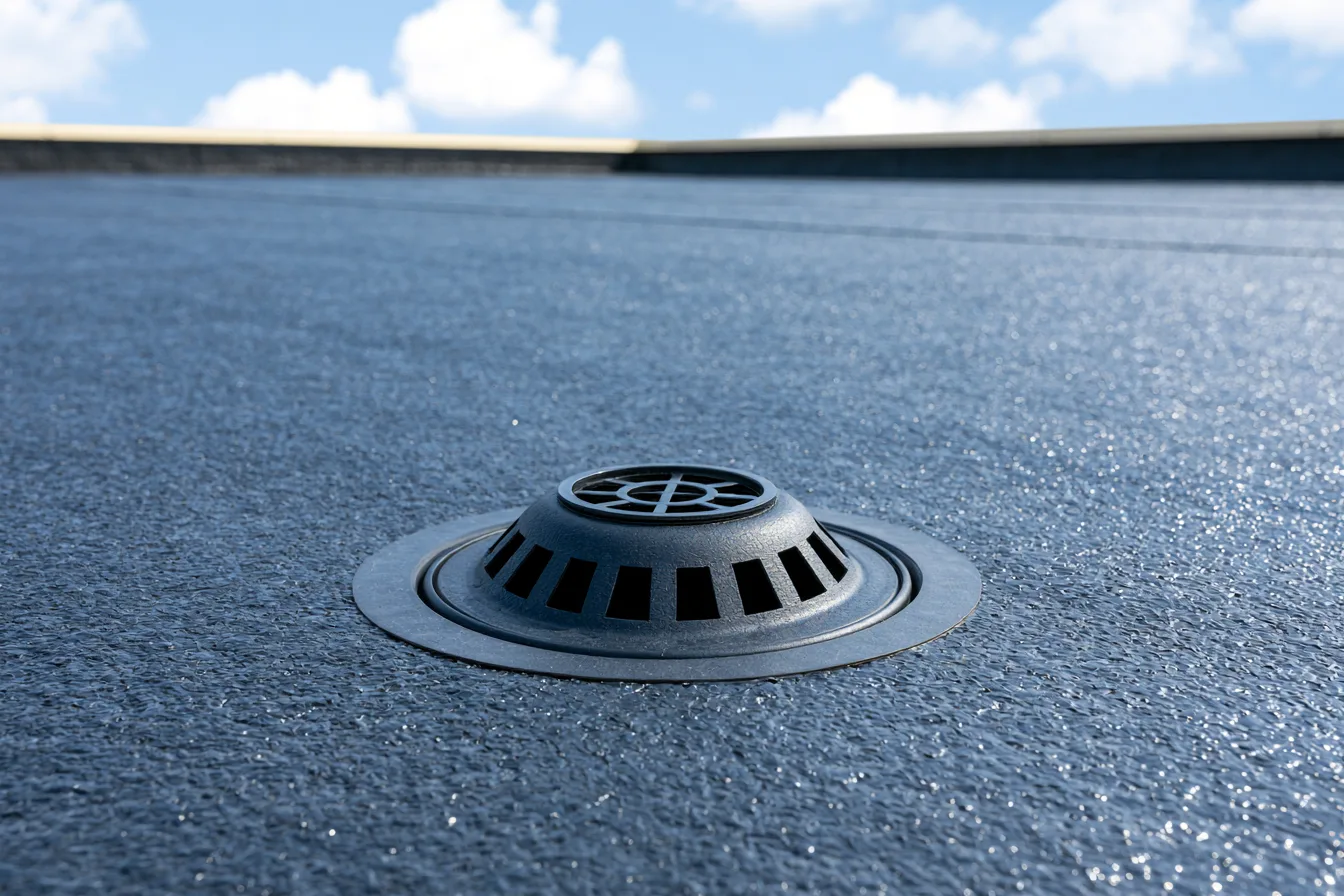
Check how water reaches the drain
A clear drain won't empty a low spot on the other side of the roof. The roof needs a path that carries water toward the outlet. If insulation below the membrane is wet or the slope needs correcting, a coating alone won't solve it.
Keep the wall outlet connected
The opening that lets roof water pass through a wall is called a scupper. Its flashing needs to join the roof without leaving water a way underneath. The outlet and overflow provision should be checked together, so the repair addresses where the water goes as well as where it gets in.
Repair the membrane you have
White roofing can be TPO or PVC, and their repair products aren't interchangeable. Rubber roofing uses different seam materials again. The roofer needs to identify what's there before choosing the patch and preparation.
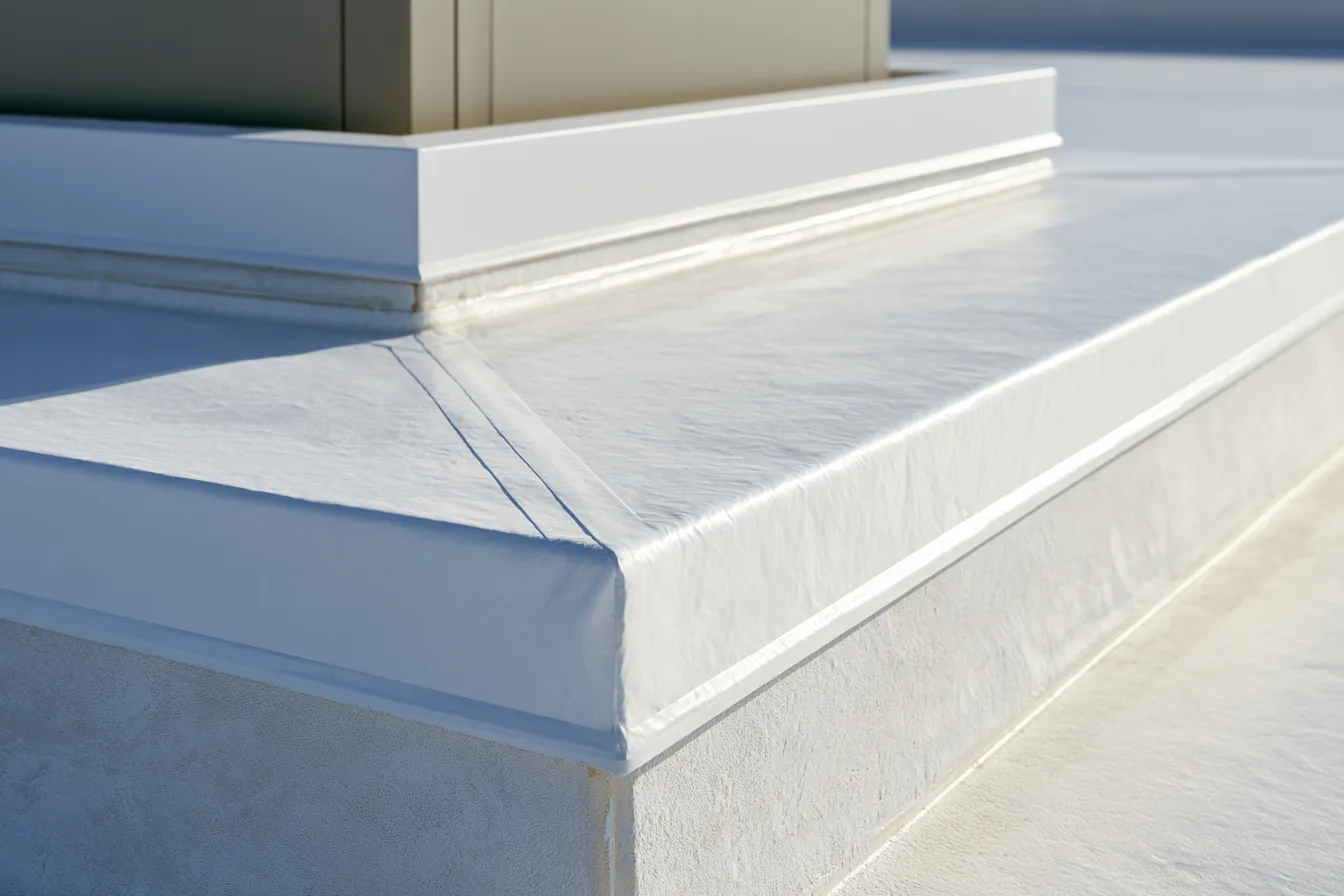
TPO
Heat-welded thermoplastic seams
Repairs need compatible TPO material and properly prepared surfaces. A sound field membrane does not rule out an opening at a seam, curb or edge.
PVC and TPO can look similar. Confirm the product before choosing repair materials.
PVC
A different thermoplastic membrane
PVC is also weldable, but its material and accessories differ from TPO. Some PVC systems offer resistance to grease and chemicals, which can matter around restaurant exhaust. Match the product to the actual exposure.
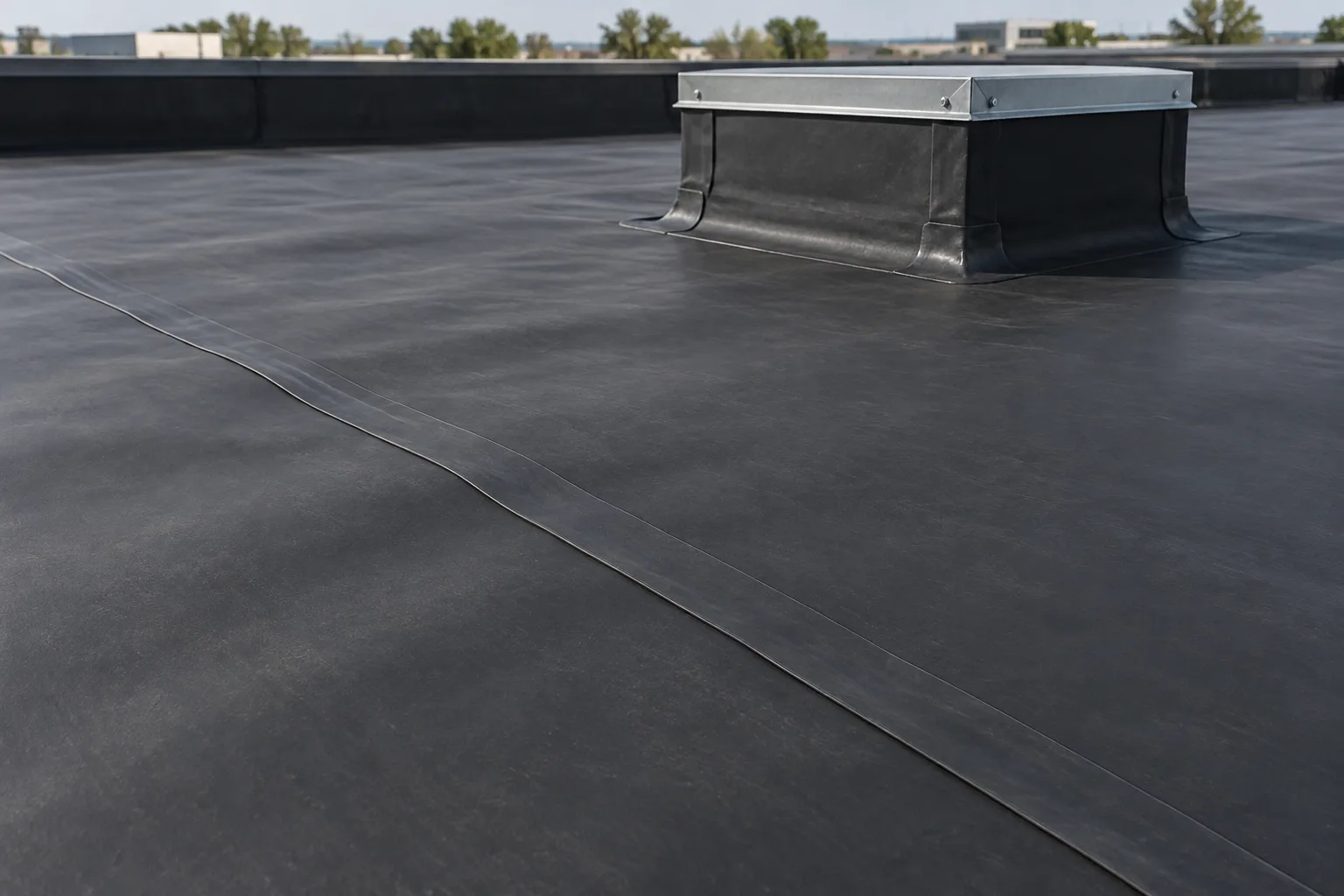
EPDM
Synthetic rubber with different seam details
EPDM systems use compatible seam tapes, adhesives and detail products. A repair approach for a thermoplastic membrane should not be assumed to fit rubber roofing.
A roof opening or a drainage fault?
Correct a defined opening
A puncture, failed seam or damaged curb flashing may be repairable where the surrounding assembly is sound. The repair must match the actual membrane and reconnect its details properly.
Correct the reason water stays
A restricted drain needs a drainage correction. A low area may need changes to the roof’s geometry; structural sag needs its own assessment. Adding another patch at the edge of the puddle does not resolve either cause.
Check for wet insulation

Patching the opening stops new water coming in, but insulation already soaked beneath it still needs attention. Wet insulation loses useful performance and can hide damage to the deck. That can extend the repair beyond the hole visible on top.
The affected material needs to be addressed before compatible membrane closes the roof again. A dry surface isn't proof that everything below it has dried, and a coating can't make wet insulation sound.
A new membrane goes on after damaged layers underneath have been addressed.
Leaks after equipment work
What changed on the roof
A new equipment curb, dropped fastener or debris left near a drain can change what happens in the next rain. If the leak followed an equipment visit, mention it when you call Claremore Roofing Experts.
What happens in dry weather
Water appearing in dry weather may come from condensate or mechanical drainage. The source needs finding before a roof patch is chosen.
Get help with your flat roof
Tell us where the water appears and what has changed on the roof. Request a free commercial inspection to work toward a compatible repair and a clear route for runoff.
Call (918) 679-3162