Why does the roof leak only when the rain blows sideways?
A steady rain passes without a drip. Then a windy shower brings back the stain beside the upstairs wall. You didn't imagine it, and it doesn't automatically mean the whole roof has failed. Wind can push water toward an opening that ordinary runoff misses.
Claremore Roofing Experts can help work back from that symptom to the roof connection. Request a free inspection with what you have already noticed; there is no need to test the leak yourself.
Why wind changes the leak
Roof coverings normally shed water through overlapping layers. In a straight rain, water can travel down those layers without reaching a weak joint beside them. Wind can push it toward a wall, under a lifted edge or into a vulnerable vent connection.
That can make the leak seem inconsistent. A repair tested only by the next gentle rain may appear successful until the weather approaches the same opening from another angle. The repeated pattern is useful evidence, even when the roof looks normal between storms.
Tell us if you've already noticed that pattern. The room and the kind of rain give the roofer somewhere to start. You don't need to measure wind speed or test the roof with a hose.
The opening can be above the stain

A wall beside a roof plane is a good example of why the inspection cannot stop at the stain. Step flashing works with successive roofing courses, and the upper connection needs protection from the wall covering or counterflashing. Water entering above that connection can reach the roof assembly behind it.
A window, siding joint or vent can also let water in. Inside, framing can carry it away from the opening before it drops onto the ceiling. That's why we start with what you've noticed and follow the water, rather than deciding where to patch from the stain alone.
What the rain pattern can tell us
Rain driven toward a wall or edge
Wind can reach a weak wall connection or push rain under lifted roofing. That helps explain why the room stays dry in some showers. The pattern narrows the inspection without proving which part failed.
A long soak or water in dry weather
A slow leak can take sustained rain to reach the room. Water appearing in dry weather raises questions about condensation, plumbing or mechanical drainage instead. The repair needs to follow the actual source.
Repair the flashing beneath the patch
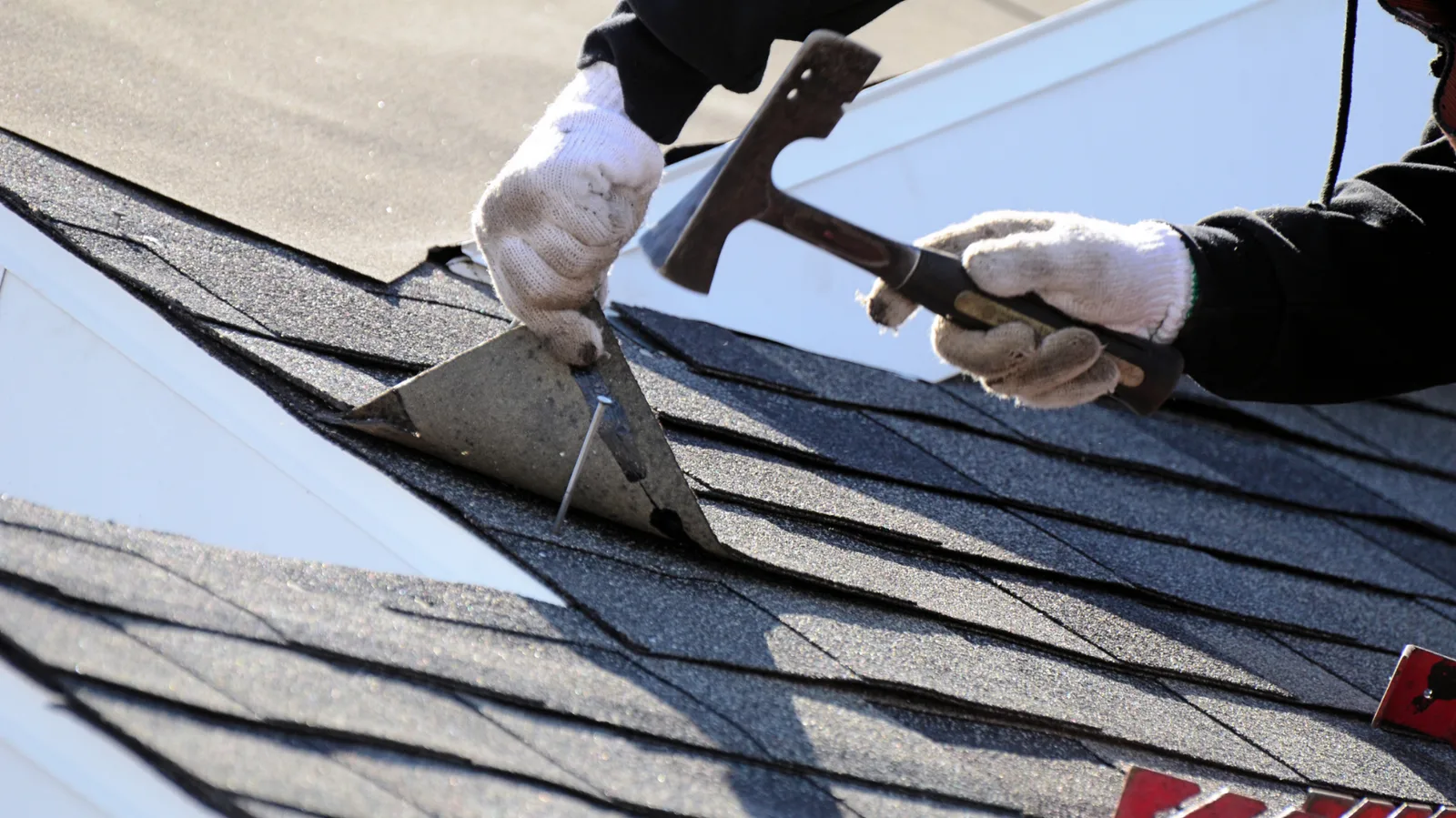
Sealant can close a gap for a while and still leave a wrong overlap underneath. As the wall or roof moves, the patch can pull apart. Repairing that detail may mean lifting nearby shingles so new flashing can carry water back onto the roof.
The shingles need to survive being lifted, and the wood has to hold the fasteners. Brittle roofing or weakened decking can widen the repair. That added work follows the condition beneath the patch, not the size of the stain in your room.
If the leak returned after a repair, tell Claremore Roofing Experts what happened. Finding why it returned is part of the inspection, not something you have to figure out before calling.
The repair needs to reconnect the layers the wind-driven rain reached.
Claremore roof repairGet help with a returning leak
Request a free roof inspection with Claremore Roofing Experts. Tell us the room, the rain that brings the water in and any repair you already know about. We'll start there.
Call (918) 679-3162